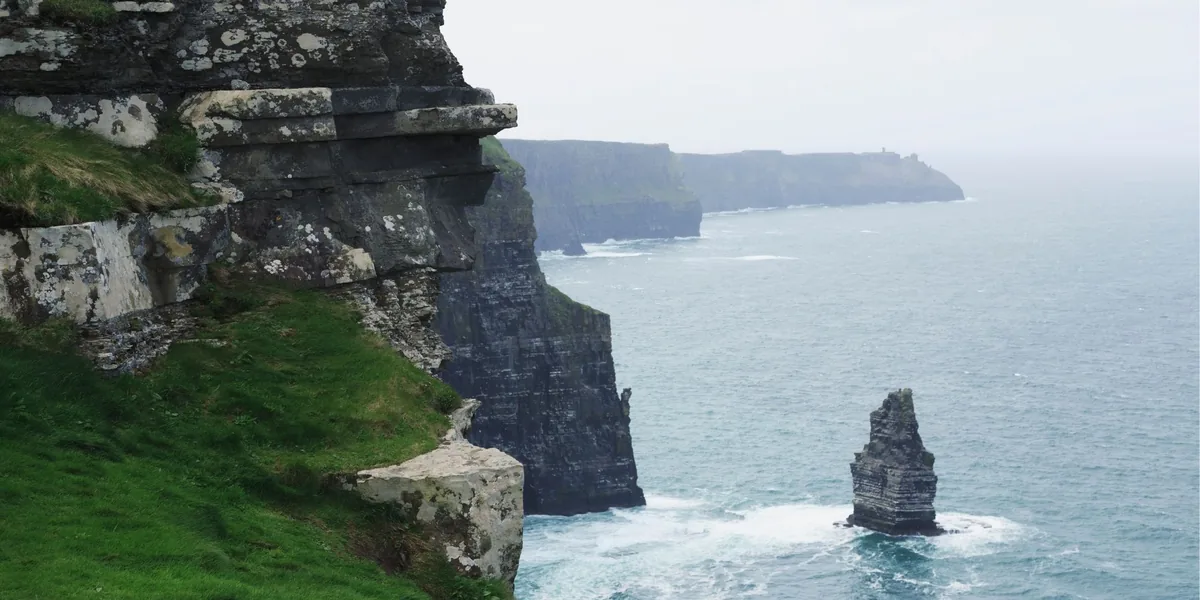
How cold is the Cliffs of Moher in November, December, January and February?
Generally cool, not persistently freezing. What matters more is how long you'll be in the open, exposed to wind and showers. Long-term averages for Shannon Airport, the regional reference station, give you the picture:
| Month | Average daytime high | Average night-time low | Average monthly rainfall | Packing emphasis |
|---|
| November | 11.1°C / 52°F | 5.5°C / 42°F | 106.6 mm | Waterproof outer layer, fleece, grippy shoes |
| December | 9.2°C / 49°F | 3.7°C / 39°F | 115.4 mm | Warm mid-layer, hood, hat, gloves |
| January | 8.9°C / 48°F | 3.3°C / 38°F | 103.8 mm | Warmest layers, weatherproof footwear, gloves |
| February | 9.4°C / 49°F | 3.3°C / 38°F | 86.7 mm | Layers and waterproofs; don't count on spring weather |
Source: Met Éireann, Shannon Airport 1991–2020 climate averages. Shannon is inland, not at the cliff edge, and monthly averages can't tell you the wind, visibility or rain on the day you visit.
Going by the temperatures alone, you might pack a light city jacket. That's the mistake to avoid. The clifftop has little natural shelter, and rain-soaked clothes stop keeping you warm quickly. Bring the windproof, waterproof layer even when the Galway forecast looks mild.
For seasonal conditions beyond clothing, see our best time to visit the Cliffs of Moher guide and the Cliffs of Moher in winter overview.
The best jacket: waterproof and windproof, not simply thick
A jacket that blocks wind and rain does more for you than a very thick coat that gets soaked. Look for a waterproof shell or a properly weatherproof winter jacket with:
- a secure, adjustable hood that won't blow straight back;
- a zip that closes high at the neck;
- cuffs you can close over gloves;
- enough room for a fleece or light insulated layer underneath;
- pockets that keep small items secure.
A packable waterproof works well if the layers under it are warm enough. A water-resistant everyday coat may cope with drizzle but not with steady rain. Down insulation is useful inside a dry, windproof layering system; an ordinary down jacket with no weatherproof shell is not ideal in the wet.
Is a heavy winter coat necessary?
Not necessarily. If you're spending 30–60 minutes around the official viewpoints, a fleece under a waterproof, windproof jacket is often more practical than one bulky coat. If you run cold or expect to stand outside for longer, add an insulated mid-layer.
Layering has another advantage: your coach will normally be heated. Take the fleece off or open your jacket on the journey, then put everything back on before you step out at the cliffs.
Why an umbrella is a bad idea
Strong gusts make an umbrella hard to control, especially at a busy viewpoint. Wild Rover's own winter packing advice tells passengers to leave umbrellas at home and wear a hooded waterproof instead. Free hands help with safety, and they also let you use your phone, your camera or the path handrails.
What shoes should you wear to the Cliffs of Moher in winter?
Waterproof hiking boots or grippy waterproof walking shoes are the best all-round choice. They grip on wet surfaces and keep your feet comfortable through puddles and muddy patches. Wear footwear you've already broken in; a trip is no time to start on stiff new boots.
You don't automatically need ankle-high hiking boots for the main viewing platforms. Some of the visitor-centre paths are paved or surfaced, and many travellers manage them in supportive, grippy waterproof walking shoes. The right choice depends on the weather, your mobility and whether you plan to go beyond the shortest viewpoint walks on officially open paths.
| Footwear | Short visit to designated viewpoints | Longer permitted walk in wet weather |
|---|
| Waterproof walking boots with grippy soles | Excellent | Best overall option |
| Waterproof trail or walking shoes | Very good | Good if conditions and terrain suit you |
| Ordinary trainers with decent grip | Sometimes manageable on drier surfaced paths | Not recommended in steady rain or mud |
| Canvas trainers or fashion sneakers | Poor in rain | Avoid |
| Smooth-soled dress boots or shoes | Avoid | Avoid |
| Wellington boots | Waterproof, but grip and support vary | Not our preferred footwear for uneven paths |
Can you wear normal trainers?
For a short, dry visit, trainers with good traction can sometimes do, but they aren't the safest or most comfortable winter plan. If they're all you have, keep to the open, surfaced visitor areas, slow down on wet steps and stay off rougher sections. If severe weather is forecast, reconsider the visit; the wrong shoes are no plan for it.
Don't step beyond the marked barriers for a better photograph. No sole grips well enough to make an unsafe cliff edge safe.
Are jeans OK?
For a brief, dry visit, yes. On a rainy day between November and February, quick-drying walking trousers are better, because denim soaks up water and can stay damp for hours. You don't need specialist hiking trousers for a short viewpoint visit, but avoid anything that drags on wet ground. In steady rain, waterproof overtrousers make a bigger difference than extra-thick trousers.
Dress in three layers, not one
The easy way to pack without a huge suitcase is three layers:
- Base layer: a comfortable long-sleeved top or light thermal. Synthetic or wool-blend copes better than cotton with a long spell outdoors in the wet.
- Mid-layer: a fleece, wool jumper or lightweight insulated jacket. This is the layer you take off on the coach or indoors.
- Outer layer: a hooded waterproof and windproof jacket.
On a milder November day you might walk in just the base layer and the shell. On a cold, blustery January day you'll probably want all three, plus gloves and a hat. No single outfit suits every winter forecast, which is why adjustable layers beat one fixed heavy outfit.
Do you need a hat, gloves and scarf?
Yes. A close-fitting hat costs little and makes the visit far more comfortable when the wind gets at your ears. Gloves matter for photographs, because otherwise you're handling your phone with cold fingers. Touchscreen-compatible gloves help, but warmth and fit matter more than the feature.
Choose a neck gaiter or a short, snug scarf over a long loose one that can whip around or blow across your view. Secure hats, glasses and anything else loose, and never chase something that blows beyond a barrier.
What to pack for a winter day tour from Dublin
A Dublin-to-Cliffs of Moher tour usually means around 13 hours on a coach, and only part of that is spent outdoors at the cliffs. The Wild Rover Dublin tour, for example, advertises a two-hour stop at the Cliffs of Moher before it continues through the Burren towards Galway. Those two hours include the visitor facilities, so you aren't expected to spend them all walking in the open.
What to wear when boarding: comfortable clothes for sitting on the bus, socks and walking shoes, with your fleece and waterproof within reach. You don't need every layer on for the whole journey.
What to keep in your day bag:
- Waterproof jacket and warm mid-layer, if you're not already wearing them.
- Hat and gloves.
- A dry pouch for your phone, passport and tickets.
- Water, a small snack and any personal medication.
- Spare socks, or a compact change of clothes if rain is forecast.
- A power bank, charging lead and tissues.
Keep the jacket, hat and gloves with you, not buried in luggage stowed away for the day. Use the restroom and sort out your layers before you step off the coach.
From Dublin · the long coach day
★ 4.7 (6,500+ reviews) From $84 13 hours · from Dublin
About two hours at the cliffs, then the Burren coast and Galway city before the drive back to Dublin. Check the departure date, inclusions, stop order and cancellation terms before you book: a standard cancellation window doesn't mean a refund just because you dislike the weather on the day.
Weighing up the journey length? Read our Cliffs of Moher from Dublin guide.
What to wear on a winter tour from Galway
From Galway the journey is shorter, but the clothing advice is essentially the same. A shorter bus ride doesn't mean a milder visit: wind and rain at the viewpoint depend on the day's weather, not on the city you left from.
The Wild Atlantic Way Day Tours Galway excursion advertises about eight hours in total, with two hours at the cliffs plus Burren and Doolin-area sightseeing. Its listing recommends comfortable shoes and weather-appropriate clothing.
If you're coming back to your Galway accommodation in the evening, leave a spare outfit there instead of carrying it all day. Keep a waterproof, gloves and a warm layer with you on the excursion all the same.
From Galway · the shorter day
★ 4.8 (4,400+ reviews) From $68 8 hours · from Galway
A day about five hours shorter than the Dublin trip, with the same two hours at the cliffs and more of the remaining time out in the Burren, where you'll want the waterproof too.
Another land-based option is Galway Tour Company's Cliffs of Moher & Burren tour, rated 4.8 from 2,000+ reviews. Check the date-specific calendar on either one: a listing doesn't promise a seat on every winter date. See also our Cliffs of Moher from Galway guide and the best winter tours compared.
Packing for children, older travellers and people who feel the cold
Visiting with children
Dress children in the same waterproof layers, and take extra care with gloves, spare socks and a change of clothes. Children may want to stand and watch the waves for a long time, then suddenly get cold when the wind picks up. A short viewpoint visit with a warm-up indoors is usually more fun than insisting on the longest walk.
Keep young children close and well back from edges and barriers. The wind can be strong enough to make balancing and holding on to loose things difficult. If visibility or wind is poor, cut the outdoor stop short; a winter visit is not an endurance test.
If you have reduced mobility
A bulky hiking outfit isn't compulsory if you only plan to use the shorter, designated accessible sections. Put footwear that is stable for your own mobility first, then warm layers that don't restrict movement and a waterproof outer layer. Check the official accessibility and parking guidance for current support, gradients and mobility assistance. Not every path suits every visitor, especially when wet or windy.
If you're particularly sensitive to cold
Bring an extra thin thermal, hand warmers if you normally use them, and spare socks. Warm, dry feet and a windproof outer layer usually help more than another heavy jumper. If your hands get too cold to work your phone, warm them up indoors; a photograph can wait.
What about cameras and phones in winter weather?
The cliffs can look spectacular in unsettled weather, but a wet, windy visit is no time for fiddly equipment.
- Use a secure wrist strap or neck strap on your phone or camera.
- Keep a microfibre cloth or lens wipe handy; sea mist and rain soften images.
- Put electronics in a waterproof pouch you can open easily between shots.
- Be careful with tripods: gusts can tip them over, and they get in the way on narrow or busy paths. When it's windy, shoot handheld from a safe, stable spot.
- Don't step over fences, lean beyond walls or stand near an unprotected edge for a photo.
- If fog hides the view, wait for it to lift only from a designated safe area, and never look for an unofficial route around it.
For fog and possible closures, see the official Cliffs of Moher weather guidance and our fog, closures and refunds guide.
Can you hike the Cliffs of Moher coastal trail in winter?
Not along the old full through-route. Packing articles online sometimes assume you can walk the whole Doolin-to-Hag's Head coast path, and under the current restrictions you can't. The official coastal walk status as of 1 August 2026 says:
- The 6 km section from Liscannor and Hag's Head to the Visitor Experience is fully closed for safety reasons.
- The Doolin side is open only as far as Surfers Path, where walkers turn back; there is no access through to the Visitor Experience.
- From the visitor centre, the signed paths north past O'Brien's Tower are open, including an 800-metre stretch that has reopened.
- Stay on designated paths, respect the barriers, and don't use the road at Surfers Path as a way round.
So pack for the open visitor-centre viewpoints, not a full-day coastal hike. Good boots don't make a closed path safe or legal to use. Our guide to walking the cliffs in winter covers the open routes and how long they take.
Should you go out if it's very windy or raining?
Ordinary rain doesn't make a visit unsafe or pointless. Severe wind is a different matter. The Visitor Experience posts its own weather status on site, and it closes when conditions are dangerous.
| Condition | Practical decision |
|---|
| Light showers, no safety restrictions | Wear your waterproofs; the shorter viewpoint walks can still be enjoyable. |
| Steady rain, but safe conditions | Make a short outdoor stop, then head for the indoor exhibition or café. |
| Thick fog or very low cloud | You may see very little even with the site open; decide whether the journey is worth it to you. |
| Strong wind or an active local warning | Check the official site status before setting out; follow staff instructions and keep off exposed routes. |
| Official site status Orange | The viewing areas are unsafe and the site is closed or closing; don't attempt the visit. |
| Official site status Red | The site is closed and evacuated; don't visit. |
The official weather and safety page describes Yellow as hazardous conditions needing extra care, Orange as unsafe for the cliff viewing areas, and Red as dangerous enough for closure and evacuation. The site's instructions come first, even if your weather app shows a mild temperature.
The Visitor Experience opens from 09:00 to 17:00 from November to February and is closed on 24, 25 and 26 December. Extreme weather can close it on other days too.
The minimal packing list if you're travelling with hand luggage only
Flying in for a short break, you don't need a whole hiking wardrobe for a two-hour scenic stop. This set works for Dublin, Galway and the Cliffs of Moher:
- One waterproof, windproof jacket with a hood.
- One fleece or warm knit to layer underneath.
- Two comfortable tops, including a warmer long-sleeved one.
- One pair of practical trousers, plus a light thermal base layer if you need it.
- Waterproof walking shoes you can also wear around town.
- Warm socks, gloves and a small beanie.
- A small bag or pouch to keep electronics and spare socks dry.
Wear your bulkiest shoes and coat on the plane to save space. If room is really tight, drop the extra casual outfit before you drop the waterproof shoes or jacket.
Common winter clothing mistakes at the Cliffs of Moher
The most avoidable mistakes are dressing for the city forecast instead of the Atlantic coast, and confusing warm with weatherproof.
- A thick coat that isn't waterproof: comfortable until the steady rain starts.
- Canvas trainers: wet feet can spoil the rest of a long tour day.
- An umbrella: more trouble than protection in gusty weather.
- Only one heavy layer: too warm on the bus and still exposed outside.
- Long, loose accessories: hats, scarves and other loose items blow away.
- No spare dry socks: a small thing that makes a big difference after a heavy shower.
- Planning an all-day hike from an old map: long sections of the coastal route are still closed.
The answer is simple: three practical layers, grippy footwear, a secure hood, and being ready to cut the outdoor part short if the weather turns.
FAQs: what to wear to the Cliffs of Moher in winter
What should I wear to the Cliffs of Moher in December?
A waterproof and windproof jacket, a fleece or warm jumper, long trousers, waterproof walking shoes, warm socks, gloves and a beanie. December is the wettest of the four winter months in the Shannon averages, and with so little daylight it pays to keep your plans flexible.
Do I need hiking boots to see the Cliffs of Moher?
Walking boots are recommended, but not essential for every short visit. Grippy waterproof walking shoes suit the surfaced, designated viewing paths in safe conditions. Longer permitted walks, wet uneven ground or very slippery conditions call for proper boots.
Can I wear jeans to the Cliffs of Moher in January?
Yes, if the day stays fairly dry and the visit is short, but jeans are not ideal in rain. They soak up water and can stay damp for much of a long coach trip. Quick-drying trousers are a more comfortable winter choice.
Do Cliffs of Moher tours provide rain jackets or umbrellas?
Don't assume they do. The land-based tour listings we checked recommend weather-appropriate clothing and don't say they supply waterproof jackets, walking boots or umbrellas. Bring your own unless your booking explicitly includes equipment.
Is a puffer jacket warm enough for the Cliffs of Moher?
It may be in dry, calm weather, but a puffer with no waterproof, windproof outer layer is uncomfortable in rain or strong wind. Wear a weatherproof shell over it, or choose a properly waterproof insulated coat.
Should I bring an umbrella to the Cliffs of Moher?
No. A hooded waterproof jacket is more practical on an exposed, windy clifftop. Umbrellas are hard to control, especially near other visitors.
Are trainers OK at the Cliffs of Moher in February?
Possibly, for a short visit on dry, surfaced paths, if they have good grip. Waterproof walking shoes are the safer all-round choice, because February can still be rainy, windy and slippery.
What should children wear at the Cliffs of Moher in winter?
Waterproof hooded coats, warm layers, grippy closed-toe shoes, gloves, hats, and spare dry socks or clothes. Keep the viewpoint stop short and plan a warm-up break if they get uncomfortable.
Do I need thermals at the Cliffs of Moher in November?
Not everyone does. The regional average high in November is around 11°C, but wind and rain make it feel much colder. A thermal top helps if you feel the cold, expect to stand outside for a long time or are visiting in unsettled weather.
Can I walk the Cliffs of Moher in winter wearing hiking gear?
Hiking clothes don't change the path restrictions. You can use the designated open viewing paths when conditions are safe, but the long Doolin-to-visitor-centre through-walk and the Liscannor/Hag's Head-to-visitor-centre section are closed under the official update of 1 August 2026.
What should I keep with me on a Dublin coach tour?
Your waterproof, fleece, gloves, hat, water, phone, dry pouch and essentials. You may spend most of the day in a heated coach, but the stop at the cliffs can be very exposed.
What if the forecast predicts heavy wind at the cliffs?
Final recommendation: dress for the wind, not the thermometer
You don't need to overpack or dress for the mountains. For most winter visitors, waterproof shoes, a reliable hooded shell, a fleece and a few small warm accessories are enough for a short walk in safe conditions. Arriving by coach, keep them in a bag you can reach.
No clothing can promise a good view or make the cliffs safe in a storm. If the site is open and conditions are manageable, enjoy the designated viewpoints and the indoor exhibition. If severe weather closes the viewing areas, change your plans; you can't outdress the wind. Our bad-weather alternatives cover what to do instead.
Planning a tour? Compare the Wild Rover Dublin day tour with the Galway Cliffs & Burren day tour and pick the one that suits where you're staying and how much time you want outdoors. Confirm winter dates, meeting points and cancellation terms before paying.
Sources and methodology
Sources we checked, and their limits
- Sources consulted on 26 October 2026; the official opening hours and coastal walk status rechecked on 11 November 2026. This is practical clothing advice, not mountaineering instruction. Weather, site status, walk access and tour schedules change, so follow on-site safety instructions and check again before you travel.
- Cliffs of Moher Visitor Experience: weather and when to visit, for the rain-jacket and walking-boot advice and the site's weather statuses.
- Cliffs of Moher Visitor Experience: your visit, for the 09:00–17:00 November to February hours and the 24–26 December closure.
- Cliffs of Moher: coastal walk status, as of 1 August 2026 and still current on 11 November 2026.
- Cliffs of Moher: parking and accessibility.
- Met Éireann: Shannon Airport 1991–2020 climate averages, a regional reference, not measurements on the clifftop; Met Éireann: warnings.
- Wild Rover Tours: what to pack for a winter bus tour, the operator's advice on footwear, rain jackets, hats and umbrellas.
- GetYourGuide listings for the tours linked above, for itineraries, time at the cliffs and clothing guidance; ratings and review counts read from the live listings in November 2026.